
AC Not Cooling: A Homeowner Checklist
When cooling drops off, a short ordered checklist saves time. Some no-cooling situations end at something a homeowner can find in a few minutes, and even when they do not, the information narrows the diagnosis considerably.
Everything below is safe to do without tools or opening electrical compartments.
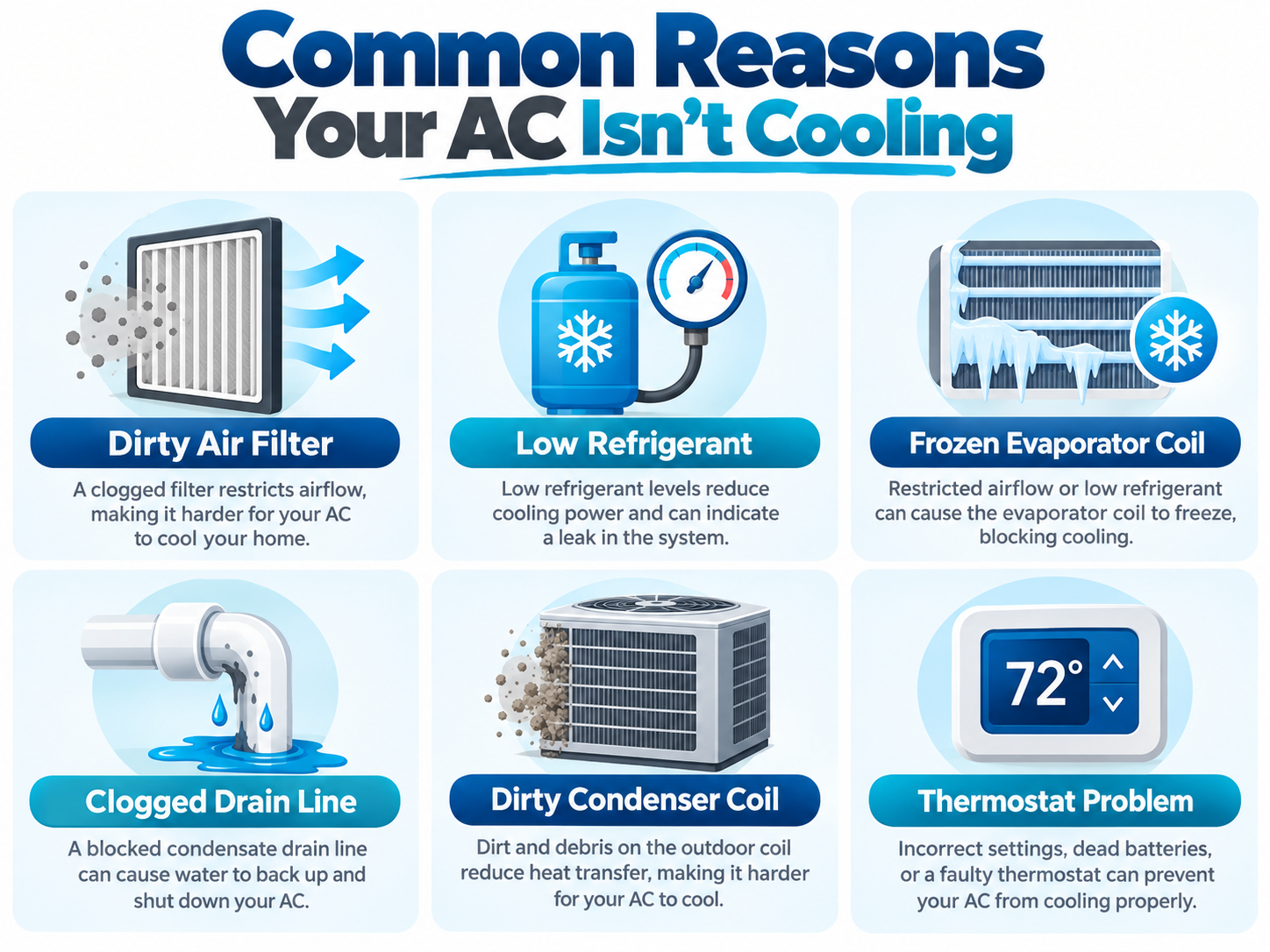
Step 1: Confirm the thermostat is actually calling for cooling
Set the mode to COOL, the fan to AUTO, and the setpoint at least three degrees below the current room reading. If the display is blank or dim, replace the batteries before anything else.
On heat pumps, make sure the system is not on EMERGENCY HEAT, which some thermostats label AUX.
Step 2: Check the air filter
Pull the filter and hold it up to a light. If light barely passes through, it is restricting airflow enough to affect cooling and can eventually freeze the coil.
Step 3: Check power at both units
Look at the breaker panel for the indoor and outdoor circuits. Reset a tripped breaker once. If it trips again, leave it off — repeated trips indicate a real electrical fault.
Also look for a light-switch style service switch near the indoor unit, which sometimes gets turned off during other work.
Step 4: Walk the vents
Open every supply register and clear furniture, rugs, and boxes away from return grilles. Closing vents in unused rooms does not save energy and often makes cooling worse.
Step 5: Look at the outdoor unit
The fan should be spinning and the air leaving the top should feel warm. A humming unit with a stationary fan usually points to a failed capacitor — shut it off rather than letting it keep straining.
Clear grass clippings, pine straw, and shrubs to leave at least two feet of clearance.
Step 6: Check for ice and water
Ice on the copper suction line or indoor coil means shutting cooling off and running the fan to thaw. Water in the drain pan or the emergency pan points to a drainage problem.
What not to do
Do not open electrical compartments, handle refrigerant, bypass safety devices, or attempt electrical repairs unless you are properly qualified. Capacitors can hold a charge even with power off.
Frequently Asked Questions
What should I check before calling for AC repair?
Thermostat mode and batteries, the air filter, the breaker and service switch, open vents and returns, clearance around the outdoor unit, and whether there is ice or standing water.
Related residential AC services
AC Not Cooling
The system runs, air moves, but the house never gets to setpoint. Here is how that gets narrowed down.
Read moreFrozen AC / Ice on Unit
Ice on the indoor coil or the copper suction line means the system needs to be shut down.
Read moreAC Airflow Problems
Weak air at the registers, uneven room temperatures, and rooms that never keep up.
Read moreEmergency AC Repair
After-hours and overnight help when a home cooling system fails during a Georgia heat stretch.
Read moreNeed AC Help Tonight?
Cooling problem after normal business hours? Emergency AC repair options are available for Columbus homeowners around the clock.
*Service availability depends on provider participation, location, technician availability, current demand, and appointment capacity.