
Frozen AC Coil and Ice on the Unit
A frozen evaporator coil is a symptom, not a root cause. The coil freezes when it gets colder than 32°F, which happens when there is not enough warm indoor air moving across it or not enough refrigerant flowing through it.
Running a frozen system is genuinely damaging. Liquid refrigerant that fails to boil off in the coil can return to the compressor, and that is one of the fastest ways to turn a modest repair into a system replacement.
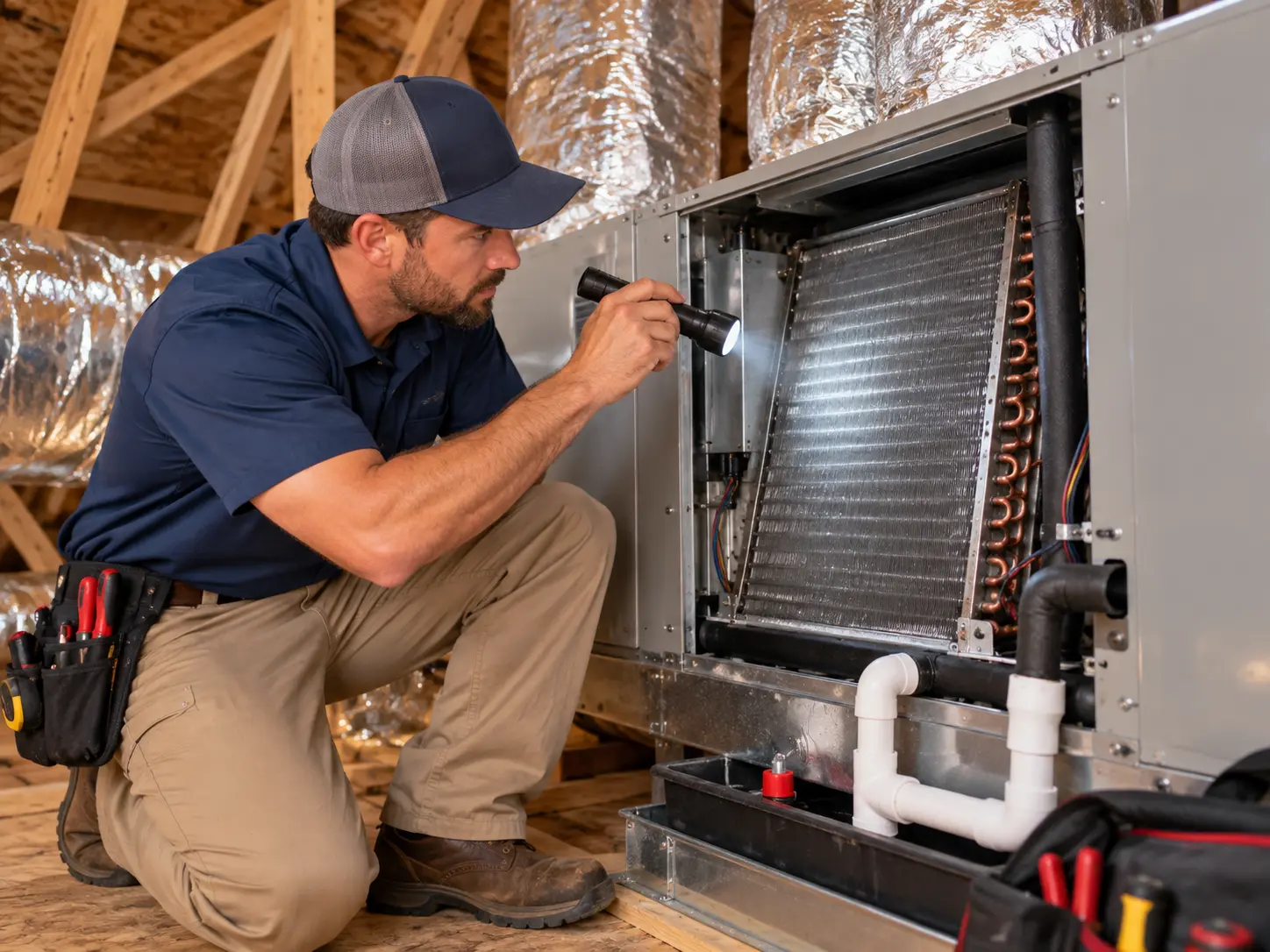
Common symptoms
- Visible ice on the indoor coil, the drain pan, or the copper suction line
- Little or no air coming from the supply vents
- Water on the floor after the system shuts off and ice melts
- The outdoor unit runs while nothing cold reaches the house
Common causes
- Severely clogged air filter
- Blocked returns, closed registers, or collapsed flex duct
- Failing blower motor or wheel packed with dust
- Low refrigerant charge, which usually indicates a leak or an incorrect charge
- Dirty evaporator coil that air cannot pass through
- Running the system in cooling mode when outdoor temperatures are low
What a professional may inspect
- Blower performance, wheel condition, and speed tap settings
- Filter and coil restriction after a full thaw
- Refrigerant charge with superheat and subcooling
- Leak search on coils, fittings, and the line set
- Metering device operation
Safe homeowner checks
- Turn the thermostat cooling OFF and set the fan to ON to thaw the coil
- Replace the filter while it thaws
- Open all supply and return vents
- Put towels down and watch the drain pan as ice melts
- Allow several hours for a full thaw before restarting cooling
Safety note: Do not open electrical compartments, handle refrigerant, bypass safety devices, or attempt electrical repairs unless properly qualified.
When to call right away
- The coil refreezes shortly after restarting
- Water from the thaw is reaching drywall or ceilings
- The blower is not running at all while ice is present
*Service availability depends on provider participation, location, technician availability, current demand, and appointment capacity.
Why this matters in Columbus
Columbus homeowners often run their systems into cool October evenings and back on during warm spells in March. Many residential systems are not intended to operate in cooling mode at low outdoor temperatures, and manufacturer specifications vary, so shoulder-season cooling is a frequent cause of coil freezing here — separate from the airflow and charge issues that are more common in mid-summer.
Frozen AC / Ice on Unit FAQs
Should I turn my AC off if it freezes?
Yes. Turn cooling off and set the fan to ON. Circulating room-temperature air through the coil thaws it faster and safely, and it prevents liquid refrigerant from reaching the compressor.
How long does a frozen coil take to thaw?
Typically two to six hours with the fan running, sometimes longer if the coil was fully iced. Never chip or scrape ice off the coil — the fins and tubing damage easily.
Will it freeze again after thawing?
If the underlying airflow restriction or refrigerant loss was not corrected, yes. A fresh filter sometimes solves it; repeated freezing almost always means a leak or a blower problem.
Why does my AC keep freezing up?
Repeat freezing almost always traces back to one of two conditions: not enough air moving across the coil, or not enough refrigerant in the system. Filters, blocked returns, dirty coils, and closed vents cause the first; a leak causes the second. Thawing the coil restores cooling temporarily, but if it freezes again the cause has not been addressed.
What should I safely check before calling for emergency AC repair?
Confirm the thermostat is set to COOL with the fan on AUTO and the setpoint below room temperature, check whether the breaker has tripped, look at the filter, make sure supply and return vents are open and unblocked, and look for ice or standing water at the indoor unit. Stop there — do not open electrical compartments or handle refrigerant.
Related residential services
AC Airflow Problems
Weak air at the registers, uneven room temperatures, and rooms that never keep up.
Read moreEvaporator Coil Repair
Indoor coil fouling, leaks, and freezing that quietly erode cooling capacity.
Read moreAC Not Cooling
The system runs, air moves, but the house never gets to setpoint. Here is how that gets narrowed down.
Read moreAC Water Leak
Water around the indoor unit or a ceiling stain below an attic air handler.
Read moreService areas near you
Need AC Help Tonight?
Cooling problem after normal business hours? Emergency AC repair options are available for Columbus homeowners around the clock.
*Service availability depends on provider participation, location, technician availability, current demand, and appointment capacity.