
Why Is My AC Electric Bill So High in Columbus, GA?
Columbus sits in a long, hot, humid cooling season. Air conditioning here is not an occasional convenience the way it is further north — it is the largest single load in most homes for several months a year, and summer bills reflect that.
That makes it hard to tell an expensive month from a failing system. This guide separates the two: what normally drives cooling costs up in this climate, and what should make you look closer. No figures here are presented as typical bills, because rates, home size, construction, and habits vary far too much for that to mean anything.
What Actually Drives Cooling Costs Up
Cooling cost is essentially runtime multiplied by how hard the equipment works while it runs. Almost everything on the list below acts on one of those two factors — either the house needs more cooling than it should, or the system delivers less cooling per hour of operation than it should.
- Longer compressor runtime through a long Georgia cooling season
- Extreme outdoor heat on peak afternoons
- High humidity, which the system must remove as well as heat
- Dirty air filters restricting airflow
- Dirty condenser coils outdoors, reducing heat rejection
- Restricted airflow from blocked returns or closed vents
- Leaking ductwork, especially runs through a hot attic
- A poorly insulated attic radiating heat into the living space
- Hot upstairs rooms pulling the whole system into longer cycles
- Excessive solar heat gain through unshaded windows
- Older windows with poor thermal performance
- Aging equipment operating below its original efficiency
- Incorrect equipment sizing for the home
- Thermostat settings, including deep setbacks and rapid recovery
- A thermostat located in an unrepresentative spot
- Equipment that runs continuously without reaching setpoint
- Heat entering from attic areas and attic-adjacent rooms
- Return-air problems that starve the blower
When Higher Runtime Is Normal
On a 96-degree Columbus afternoon with high dew points, a correctly sized system may run nearly continuously and that is not a fault. Equipment is sized for a design condition close to that, not for the extremes, and long steady cycles are actually better for dehumidification than short bursts.
The test is comfort, not runtime. If the house holds its setpoint, the air from the vents is noticeably cool, and the home does not feel damp, a system that runs most of the afternoon is doing its job.
When Constant Runtime May Signal a Problem
Runtime becomes a symptom when it stops producing results. Any of the following is worth investigating rather than absorbing into the bill.
- Indoor temperature continues rising while the system runs
- The system never reaches the setpoint, even overnight
- Air from the vents is weak or noticeably reduced
- Air from the vents is not sufficiently cool
- Ice forms on the refrigerant lines, indoor coil, or outdoor unit
- Utility usage changes dramatically without an obvious reason
Where to Start If Your Usage Jumped
Begin with the two things that cost nothing: look at the filter, and walk the house checking that supply and return vents are open and unblocked. A loaded filter is the single most common cause of a system working harder than it needs to.
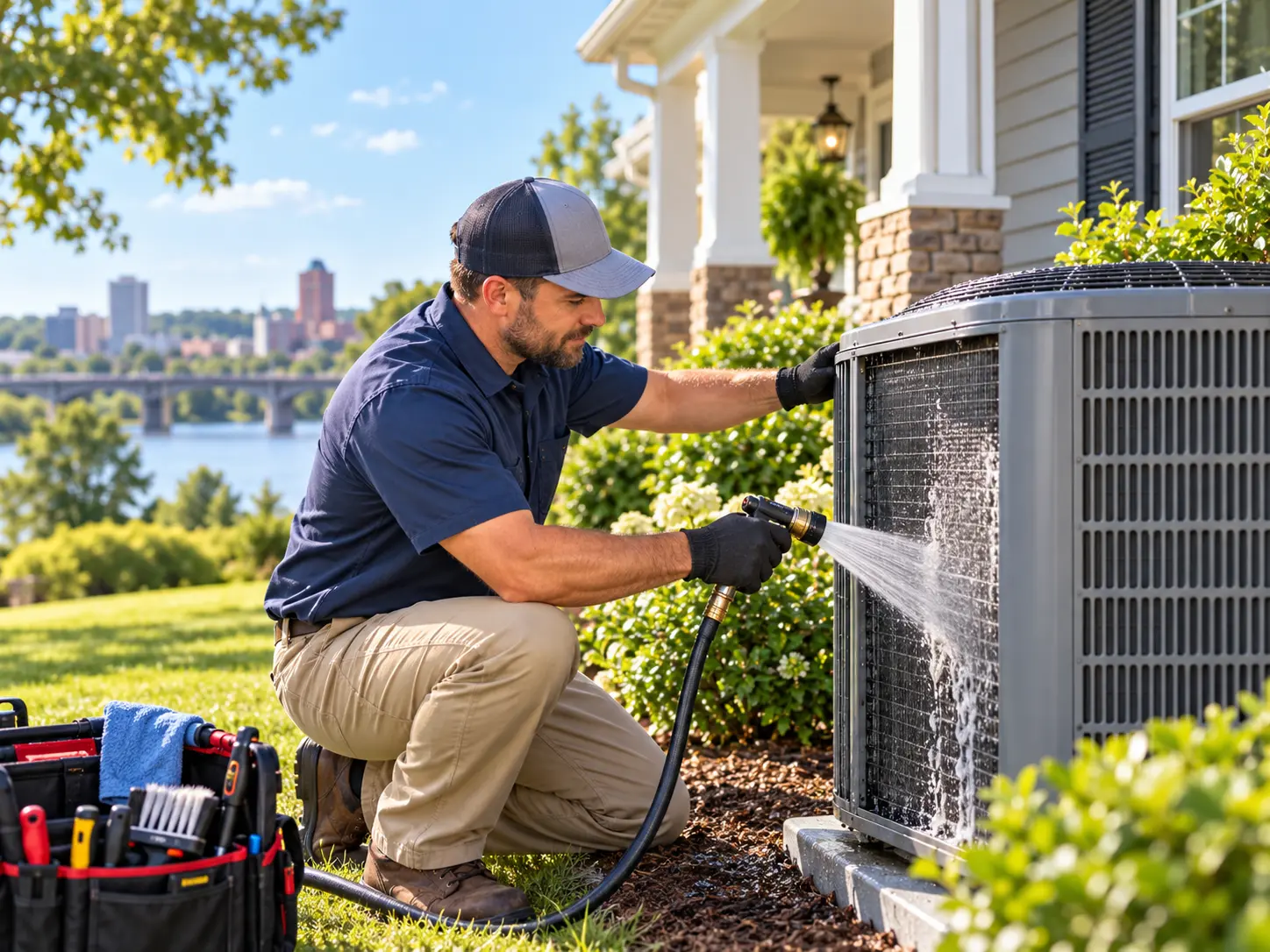
Next, look at the outdoor unit. Grass clippings, cottonwood, shrubs grown in close, and general grime on the coil all reduce heat rejection, which makes the compressor run longer for the same result. Keep the area clear; leave any actual coil cleaning and all electrical work to a professional.
If those are clean and usage is still up, the likely candidates are duct leakage into the attic, low airflow, refrigerant charge, or an aging system losing capacity. Those need measurement — an AC tune-up is the practical way to get them checked, and a repair-or-replace decision follows from what is found.
Frequently Asked Questions
Why does my AC run all day in Columbus?
During peak summer heat, long runtime is often normal — the outdoor design conditions here keep systems working most of the afternoon, and steady operation dehumidifies better than short cycles. It becomes a concern when the house stops keeping up: rising indoor temperature, weak or lukewarm air at the vents, or ice anywhere on the system.
Can a dirty air filter raise my electric bill?
Yes. A loaded filter restricts airflow, which reduces how much heat the system moves per hour and stretches every cooling cycle. Severe restriction can also freeze the evaporator coil, at which point cooling largely stops while the equipment keeps drawing power.
Can duct leaks increase cooling costs?
Considerably, especially when ducts run through an attic. Supply leaks dump conditioned air into a space that may exceed 130 degrees, and return leaks pull that hot, humid air back into the system. Both make the equipment work longer for less comfort in the rooms you actually use.
Does attic insulation affect AC performance?
It affects the load the system has to overcome. A hot attic above thin insulation radiates heat down into ceilings all afternoon and into the evening, which is why upstairs rooms in particular stay warm long after sunset. Insulation does not fix a failing system, but it changes how hard a healthy one has to work.
Why is my upstairs hotter and more expensive to cool?
Heat rises, attic heat presses down, and the ductwork serving upper floors is usually the longest and most exposed in the house. The thermostat is typically downstairs, so the system satisfies the lower floor and stops before the upper floor catches up — leading either to discomfort or to lowering the setpoint and running much longer. The hot-upstairs guide covers the causes in detail.
Can an oversized AC increase energy use?
It can raise costs indirectly. Oversized equipment satisfies the thermostat quickly and shuts off, producing frequent starts, poorer dehumidification, and a house that feels clammy — which often prompts a lower setpoint. Starts and stops are also harder on components than steady running.
Should I raise my thermostat during the day?
A modest setback while the house is empty generally reduces runtime. Very deep setbacks in this climate can backfire, because the system then has to remove both heat and accumulated humidity when it recovers, which takes a long, hard cycle. Small, consistent adjustments usually work better here than large swings.
Related residential AC services
AC Running Constantly
The system never cycles off, and utility bills climb along with the run time.
Read moreAC Tune-Up
A pre-season performance check that verifies the system can actually carry a July load.
Read moreAC Replacement
How to weigh a major repair against replacing an aging home cooling system.
Read moreAC Airflow Problems
Weak air at the registers, uneven room temperatures, and rooms that never keep up.
Read moreNeed AC Help Tonight?
Cooling problem after normal business hours? Emergency AC repair options are available for Columbus homeowners around the clock.
*Service availability depends on provider participation, location, technician availability, current demand, and appointment capacity.