Residential AC Maintenance Checklist for Columbus, GA Homeowners
Maintenance is easier to value when you know what it covers. "Tune-up" is not a standardized term, so two visits at the same price can look very different once you compare what was actually inspected and measured.
This checklist is written so a Columbus homeowner can follow along during a visit, ask better questions, and understand what was found. It reflects a long cooling season: in this climate, drainage, coil condition, and airflow deserve particular attention.
What a Maintenance Visit May Include
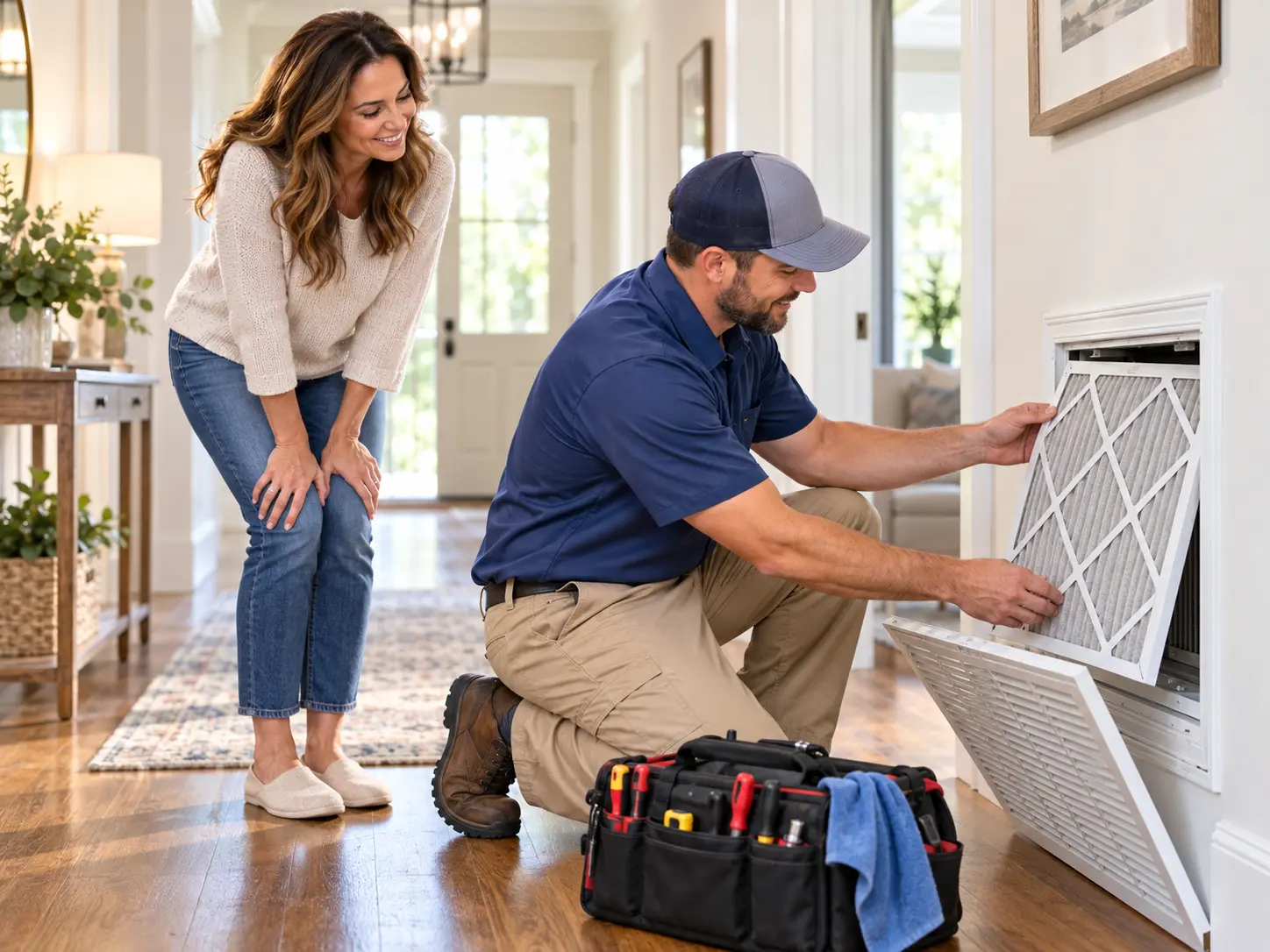
Not every item applies to every system, and equipment type affects the specifics. Still, this is a reasonable expectation of scope for a residential visit.
- Check the air filter — condition, size, and fit
- Inspect the indoor (evaporator) coil
- Inspect the outdoor (condenser) coil
- Check the condensate drain, including the trap and termination
- Inspect the drain pan and any secondary pan
- Inspect the float or safety switch and confirm it functions
- Inspect electrical connections for tightness and heat damage
- Evaluate capacitor condition
- Check thermostat operation and configuration
- Inspect blower operation and blower wheel cleanliness
- Check airflow, including return-side restrictions
- Measure temperature split across the coil when appropriate
- Inspect refrigerant-related operating conditions
- Listen for unusual compressor or fan noises
- Inspect visible duct issues in accessible areas
- Check system startup and shutdown behavior
- Review findings with the homeowner
What Columbus Homes Need Extra Attention On
Long, humid cooling seasons put more water through condensate systems here than in drier regions, so drain lines, traps, pans, and float switches deserve a careful look every year rather than a glance.
Attic-routed ductwork is the other local weak point. Visible damage, disconnected sections, and crushed flex runs are worth reporting even when the system is technically cooling, because they quietly raise runtime all summer.
Maintenance Visit vs Sales Call: Questions You Can Ask
Most technicians are glad to explain their findings, and asking does not imply distrust — it is simply how a homeowner turns a recommendation into an informed decision. These questions also help you compare one company's advice with another's.
- What did you measure?
- Can you show me the failed component?
- Is this repair urgent, or preventative?
- Can the system safely keep running?
- What happens if I delay the repair?
- Is repair reasonable for a system of this age and condition?
- Why are you recommending replacement?
- Was system sizing evaluated?
- Are there multiple repair options?
What Maintenance Cannot Guarantee
Maintenance can reduce risk, catch developing problems earlier, and keep a system operating closer to its design conditions. It cannot guarantee that nothing will fail.
Components can fail between visits, and a system that measured well in April can still lose a capacitor in July. Anyone promising that maintenance prevents breakdowns is overselling it. The honest case for maintenance is better odds and earlier warning, not certainty.
What You Can Do Between Visits
Check the filter monthly during the cooling season and replace it when it looks loaded rather than waiting for a calendar date. Keep vegetation, clippings, and stored items clear of the outdoor unit. Keep supply and return vents unblocked.
Pay attention to changes: a new noise, a longer runtime, a musty smell, or water where there was none before. Reporting a change early usually means a smaller repair.
Frequently Asked Questions
How often should residential AC maintenance be performed?
Annual maintenance before the cooling season is the common recommendation for a straight air conditioning system. Heat pumps run year-round, so many homeowners have those looked at twice a year — once before cooling and once before heating.
Does maintenance prevent every breakdown?
No. Maintenance reduces risk and often catches developing issues before they strand you in July, but components can still fail without warning. It improves the odds; it does not guarantee an outcome.
What should an AC tune-up include?
Filter and airflow, indoor and outdoor coil condition, the condensate drain and safety switch, electrical connections and capacitor condition, thermostat and blower operation, refrigerant-related operating conditions, unusual noises, visible duct issues, and a review of the findings with you.
Should refrigerant be added during every tune-up?
No. Refrigerant is not used up in normal operation, so a system that is low has a leak somewhere. Topping it off annually without finding the leak treats the symptom and postpones the actual repair.
Do I need to replace the system just because it is older?
Age alone is not a reason. What matters is the condition of the major components, the cost and frequency of repairs, how well the system performs in peak heat, and whether parts are still available. Ask what specifically is failing before treating age as the deciding factor.
How often should I check my filter?
Look at it monthly during the Columbus cooling season. Filter life depends on runtime, pollen, dust, and household conditions far more than on the interval printed on the packaging.
Do pets mean I should check the filter more often?
Yes. Pet hair and dander load filters faster, and a restricted filter is one of the most common contributors to weak airflow, poor dehumidification, and frozen coils.
Related residential AC services
AC Tune-Up
A pre-season performance check that verifies the system can actually carry a July load.
Read moreAC Repair
Diagnosis and repair help for home cooling systems that are underperforming, short cycling, or shut down entirely.
Read moreAC Replacement
How to weigh a major repair against replacing an aging home cooling system.
Read moreAC Drain Line Repair
Clogged condensate lines, overflowing pans, and float switches shutting systems down.
Read moreNeed AC Help Tonight?
Cooling problem after normal business hours? Emergency AC repair options are available for Columbus homeowners around the clock.
*Service availability depends on provider participation, location, technician availability, current demand, and appointment capacity.