
Strange AC Noises and What They Mean
Cooling equipment has a normal sound signature: a steady hum outdoors, air movement indoors, and a soft click when a cycle starts. Anything sharply different is worth paying attention to, because several noises are early warnings of a failure that has not happened yet.
Matching the sound to its usual cause helps you decide whether to keep running the system or shut it down.
Common symptoms
- Loud buzzing at the outdoor unit, especially at startup
- Screeching or squealing from the air handler
- Rattling or vibration from the outdoor cabinet
- Clicking that repeats without the system starting
- Banging or clanking from inside the compressor
- Hissing or bubbling near the refrigerant lines
Common causes
- Failing capacitor or contactor chatter
- Worn blower motor bearings or a loose blower wheel
- Loose panel screws, debris in the fan cage, or a bent fan blade
- Compressor internal damage or a failing mount
- Refrigerant leak producing hissing
- Debris such as sticks or pine straw drawn into the condenser
What a professional may inspect
- Capacitor and contactor condition
- Blower wheel balance and motor bearing play
- Fan blade alignment and cabinet fasteners
- Compressor amp draw and start characteristics
- Leak detection along coil joints and the line set
Safe homeowner checks
- Shut the system off if the noise is grinding, screeching, or banging
- Look for obvious debris in the outdoor fan grille, unit powered off
- Check that the filter and blower access panel are seated properly
- Note when the sound occurs — startup, steady run, or shutdown
- Record a short video of the sound to share with a service professional
Safety note: Do not open electrical compartments, handle refrigerant, bypass safety devices, or attempt electrical repairs unless properly qualified.
When to call right away
- Grinding or metal-on-metal sounds — shut the system down
- Loud buzzing with the fan not turning
- Hissing plus a sudden loss of cooling, which suggests a significant leak
*Service availability depends on provider participation, location, technician availability, current demand, and appointment capacity.
Why this matters in Columbus
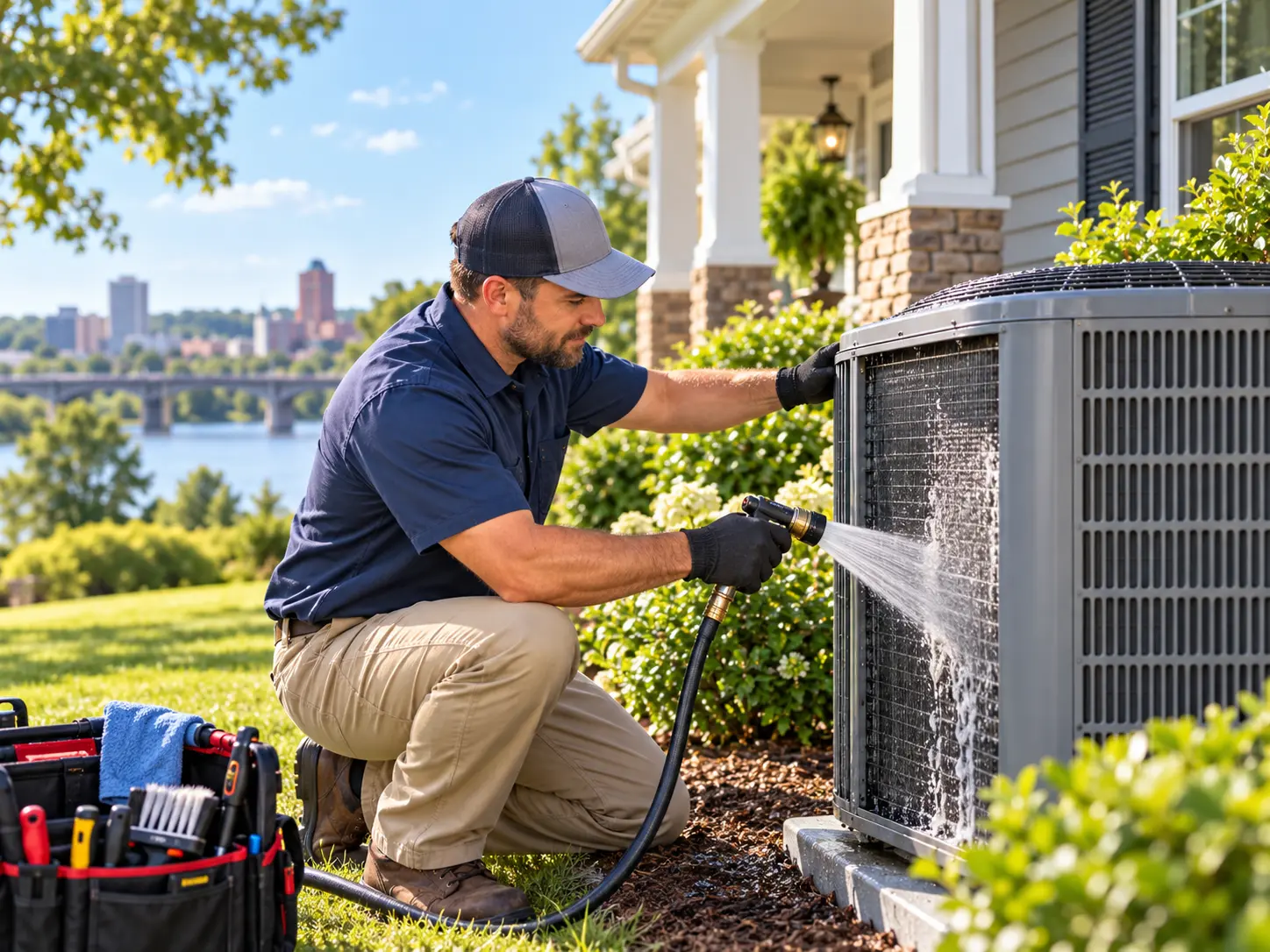
Pine straw, pollen, and storm debris are constants around Columbus yards, and outdoor units placed near landscaping beds pick up plenty of both. A large share of rattling and grinding complaints here trace back to debris in the condenser cabinet rather than mechanical failure.
What Does That AC Noise Mean?
Sound is one of the more useful diagnostic clues a homeowner can provide, because different failures make characteristically different noises. The table below is a general orientation, not a diagnosis — the same sound can come from more than one place, and location matters as much as the sound itself.
| Sound | Possible areas | Priority |
|---|---|---|
| Whirring | Fan motor, blower motor, bearings, debris, rotating components | Inspect soon if new or noticeably louder |
| Buzzing | Electrical component, contactor, capacitor, motor, loose component | Higher priority, especially if the system struggles to start |
| Repeated clicking | Relay, thermostat or control problem, electrical startup issue | Professional inspection recommended |
| Grinding | Motor or bearing problem | Turn the system off and arrange inspection promptly |
| Rattling | Loose panel, hardware, debris, fan assembly | Inspect before damage worsens |
| Hissing | Air leakage, duct leak, or a refrigerant-related issue depending on source | Professional diagnosis |
| Gurgling or bubbling | Condensate drainage system | Inspect drainage |
| Screeching | Motor, bearings, or rotating components | Prompt inspection |
AC Noise Repair FAQs
Is a buzzing outdoor unit dangerous?
Buzzing usually means an electrical component is straining, most often a weak capacitor or a chattering contactor. It is not typically an immediate hazard, but continuing to run it can damage the compressor, so it should be checked promptly.
Why does my AC squeal when it starts?
A brief squeal often comes from a blower motor bearing or belt on older equipment. A continuous screech, particularly with reduced airflow, is a reason to shut the system off.
Should I turn my AC off if it starts making a loud noise?
For grinding, screeching, or a loud metallic clatter, yes — shut it off at the thermostat and arrange an inspection. Those sounds usually mean parts are contacting each other, and continued running can turn a component repair into a compressor or motor replacement. A mild new rattle is less urgent but still worth reporting.
What does a loud whirring noise from my AC mean?
Whirring generally comes from something that rotates: a blower wheel, a condenser fan, worn bearings, or debris caught in the fan path. A whir that has become noticeably louder, or that changes pitch as the system runs, is worth inspecting before the motor or bearing fails outright.
Why does my AC buzz but not start?
A buzz with no start often involves the electrical side — a contactor, a capacitor, or a motor that is drawing current but not turning. Repeated attempts can add heat and stress to those components, so it is better to stop the system and have it looked at than to keep cycling the thermostat.
Why does my outdoor unit rattle?
Rattling outdoors is commonly a loose service panel, loose hardware, or yard debris that has found its way into the cabinet. It can also be a fan blade that has shifted. Because the cabinet contains live electrical components, this is a look-don't-open situation for homeowners.
What does a hissing AC sound mean?
Hissing may be air escaping a duct connection, air moving through an undersized or restricted return, or a refrigerant-related issue, depending on where the sound originates. Note whether you hear it at the indoor unit, at a vent, or at the refrigerant lines outdoors — that detail narrows the diagnosis considerably.
Why is my AC making a grinding noise?
Grinding typically indicates a motor or bearing problem, meaning metal components are wearing against each other. Turn the system off and arrange a prompt inspection; running through a grinding noise frequently ends in a failed motor.
Related residential services
Condenser Repair
The outdoor unit: coils, fan motors, capacitors, contactors, and compressor issues.
Read moreAir Handler Repair
Indoor unit faults: blower motors, control boards, coils, drain pans, and cabinet leaks.
Read moreAC Repair
Diagnosis and repair help for home cooling systems that are underperforming, short cycling, or shut down entirely.
Read moreEmergency AC Repair
After-hours and overnight help when a home cooling system fails during a Georgia heat stretch.
Read moreService areas near you
Need AC Help Tonight?
Cooling problem after normal business hours? Emergency AC repair options are available for Columbus homeowners around the clock.
*Service availability depends on provider participation, location, technician availability, current demand, and appointment capacity.